Faculty
Spelman Professor Angelino Viceisza Lends Expertise to Landmark Review of NASA's Innovation Programs
Congressionally Mandated Committee Taps Spelman Economist to Help Evaluate ‘America’s Seed Fund’ Program at NASA
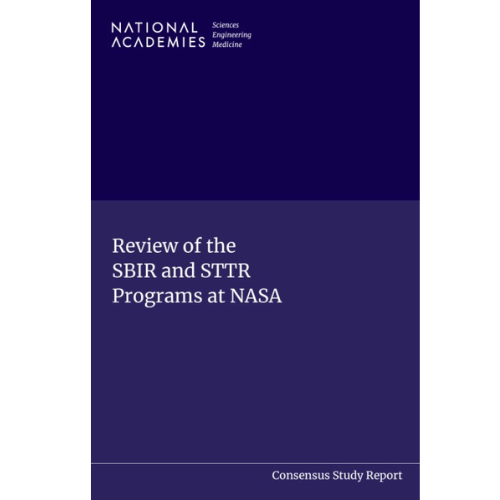
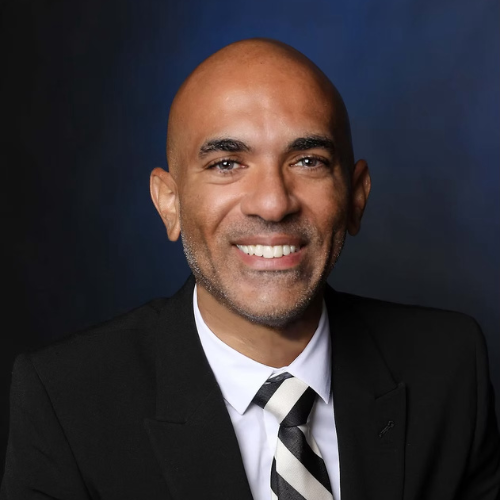 Angelino Viceisza, Spelman College professor of economics, recently served on a congressionally mandated committee to evaluate NASA’s Small Business Innovation Research (SBIR) and Small Business Technology Transfer (STTR) programs. The report is now public and available to view.
In 2023, Dr. Viceisza was invited to analyze the benefits of NASA’s SBIR-STTR programs and the effectiveness of NASA’s program management practices. He joined a team of 15 experts from a variety of institutions, including Columbia University, Iowa State University, Massachusetts Institute of Technology, Morgan State University, Princeton University, University of Southern California and more.
 “Working with this extraordinary group of academics, civil servants, and thought leaders on NASA’s SBIR-STTR programs has been a true honor—reminding me that the most meaningful service is that which enriches you even more than you contribute,” said Dr. Viceisza.
Otherwise known as ‘America’s Seed Fund,’ SBIR-STTR programs provide equity free funding through federal agencies to America’s small businesses. America's Seed Fund is coordinated by the Small Business Administration and funded through 11 participating federal agencies, including NASA.
From the evaluation, the committee identified 34 findings. From their findings, they developed 16 recommendations, listed in full in Boxes S-1 and S-2 in the Review of the Small Business Innovation Research and Small Business Technology Transfer Programs at NASA report. Key findings are outlined below:
- Although NASA accounts for only 4% of SBIR-STTR funding, its awards are tightly aligned with agency needs, advancing technology readiness and innovation. According to NASA Jet Propulsion Laboratory program materials, at least eight distinct elements of the Mars 2020 Perseverance Rover were developed through the SBIR-STTR pipeline.
- Despite such accomplishments, broader participation and impact may be constrained by relatively small awards, administrative hurdles, a concentrated base of STTR research partners, and limited outreach.
- NASA is actively working to improve the SBIR-STTR programs through restructuring and experimentation.
Overall, the committee recommended that NASA allow more flexibility in funding SBIR-STTR awards, develop an integrated support system for under resourced and first-time applicants, and expand the availability of information on research partnerships for both SBIR and STTR awards. Additionally, they recommended that NASA standardize and expand successful outreach models from the SBIR Ignite pilot, a program focused on technologies with strong commercial pull—including commercial markets outside of NASA.
Professor Viceisza was an integral member of the NASA team that evaluated strengthening the commercialization of research supporting small businesses and expanding access to innovation opportunities,” said Dr. Maryann Feldman, committee co-chair and Watts Professor of Public Policy and Management at Arizona State University. “It’s encouraging to see evidence-based economic research and expertise in entrepreneurship informing national innovation policy. This kind of service helps ensure that public investments in R&D create lasting economic and societal impact.”
Dr. Viceisza was selected to serve on the committee, in part, due to his background and expertise as a behavioral and experimental economist with research in household finance and entrepreneurship. He currently serves as director of the Center for Black Entrepreneurship at Spelman, research associate of the National Bureau of Economic Research (NBER), affiliate of J-PAL at MIT, and associate editor at Journal of Economic Behavior and Organization.