
Faculty
Students
Academics
Danielle Dickens, Ph.D., Uses Research and Mentorship to Prepare Students for Graduate School and Careers
Through the GRACE Lab, Students Gain Hands-on Experience in Research Publication and Professional Development
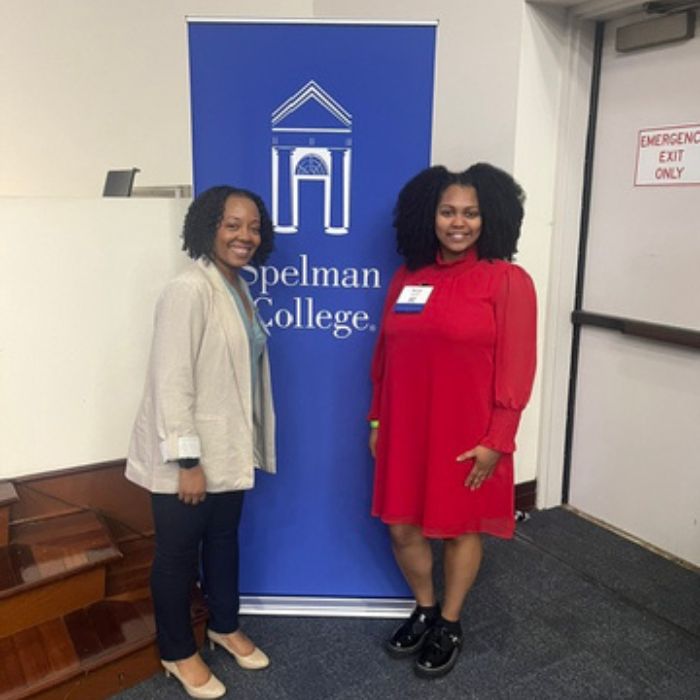 When Danielle Dickens, Ph.D., joined Spelman College's psychology department in 2015, she set out to do more than teach psychology; she committed herself to preparing Black women to excel as researchers, scholars and professionals.
A social psychologist whose research examines how race, gender, age and class shape the experiences of Black women, Dickens, C’2009, extends that work through mentorship. As director of the Gender, Race, and Cultural Empowerment (GRACE) Lab, she provides undergraduate students with hands-on research experiences that introduce them to the full research process while helping them explore future academic and career pathways.
"It is important to me to train Black women to become independent researchers, not only to increase representation in academic and research spaces, but also to empower them to lead projects that reflect their lived experiences," Dickens said.
Dickens said her approach to mentoring was shaped by her own undergraduate experience as a scholar in Spelman's Minority Biomedical Research Support - Research Initiative for Scientific Enhancement (MBRS-RISE). The MBRS RISE program is an institutional grant initiative funded by the National Institutes of Health (NIH). Through that experience and the mentorship she received from faculty members, like Sinead Younge, Ph.D., Danforth Endowed Professor in Psychology at Morehouse College, she learned the value of scientific rigor, accountability and intellectual independence.
“When I returned to Spelman as a faculty member in the psychology department, I sought to have that same transformative impact on students and to prepare Black women to enter academic and professional spaces with assurance, particularly in environments where they may be underrepresented or tokenized, while equipping them with the tools to thrive,” Dickens said.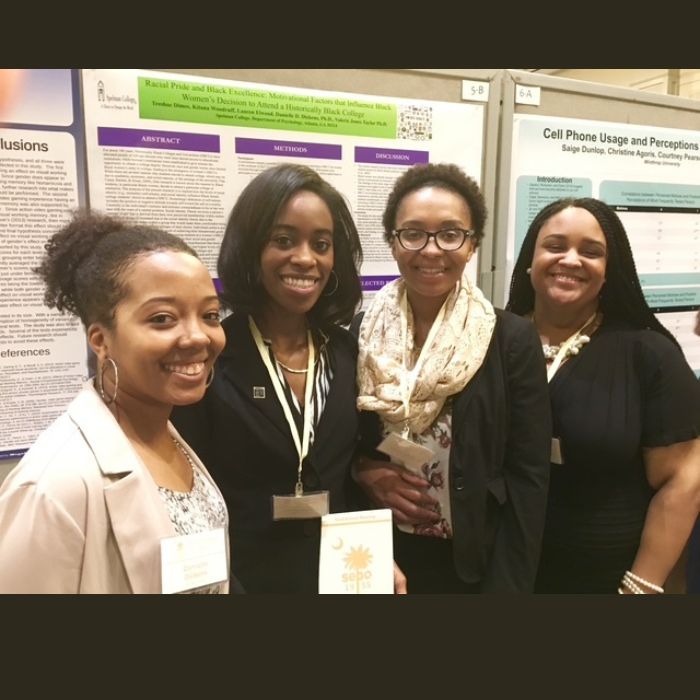 Today, those lessons inform the work taking place in the GRACE Lab. Students receive training in literature reviews, data analysis, scientific writing and professional development. They also gain experience presenting research at conferences and contributing to scholarly publications.
Nia Kaniyah Turner, C’2027, who’s currently participating in Dickens’ summer research program, also believes Dickens has been a supportive and encouraging mentor.
“She creates an environment where students feel comfortable learning and growing as researchers. Through her guidance, I have gained valuable exposure to the research process so far and have been encouraged to think critically, develop new skills and build confidence in my abilities,” Turner said. “I am grateful for the opportunity to learn from her and contribute to the work being done in the lab.”
For students who are conducting research for the first time, Dickens provides guidance throughout each stage of the process. Students learn how to develop research questions, analyze data and communicate findings to academic audiences. The lab also offers leadership opportunities that allow students to take on responsibilities that build confidence and professional skills.
"Through rigorous and inclusive lab experiences, Spelman psychology students develop a scientific identity and begin to see themselves as emerging scientists and researchers," Dickens said.
Student Stories
The outcomes of that approach are evident in the accomplishments of GRACE Lab students and alumnae, many of whom have gone on to graduate study, research careers and leadership roles.
Nailah Johnson, C’2024, and current doctoral student in developmental psychology at Cornell University, first joined the GRACE Lab through a six-week summer research program. At the time, she had little research experience outside the classroom. Through the program and her subsequent work as a research assistant, she learned advanced research methods, presented at conferences and co-authored published research.
"All of the skills I learned while in the GRACE Lab are ones that I'm using today as a doctoral student studying developmental psychology at Cornell University," Johnson said.
Johnson credits the experience with helping prepare her for graduate school and easing her transition into doctoral study. She also said Dickens encouraged her to explore doctoral programs and create a plan for applying to them. “Dr. Dickens and the GRACE Lab provided me with an excellent foundation, which has allowed me to grow even more in graduate school,” Johnson said.
For Cheyane Mitchell, C’2020, the lab helped shape both her academic interests and professional direction. Mitchell earned a master's degree in data science and now works at RTI International (Research Triangle Institute). "Many of the skills I use today can be directly traced back to what I learned from Dr. Dickens," Mitchell said.
As a student researcher, Mitchell participated in projects that involved data collection, qualitative analysis, publication and conference presentations. She said the experience helped her understand how data and research can be used to examine complex social issues and create meaningful impact. The skills she developed in the lab contributed to her decision to pursue a career in data science and applied research.
“Dr. Dickens also taught me the importance of approaching work with purpose and valuing the human stories behind the data. She demonstrated how research can generate knowledge while elevating the voices and experiences of communities that are too often overlooked,” Mitchell said. “That lesson continues to influence how I approach my career, my goals and the kind of mentor I hope to become.”
Like others before her, Lauren Rachel Wall, C’2028, said Dickens' mentorship has helped strengthen her understanding of the research process while creating a supportive learning environment. "Dr. Dickens consistently demonstrates patience and dedication, ensuring that the other research assistants and I fully understand each process. This approach not only deepens my comprehension of the work but also makes the research experience more meaningful and impactful," Wall said.
Bryneé Evans, research associate and lab manager of the GRACE Lab, said Dickens’ scholarship has helped establish the lab as a space dedicated to studying the experiences of Black women. "In my time studying and working within psychology, I hadn't had the opportunity to work with someone who specializes in the psychology of Black womanhood, until Dr. Dickens. Her expertise and first-hand experience in this topic are invaluable because she understands the lived experience of Black women and specifically the microaggressions and intersectional oppression we often face in the workplace and in general," Evans said.
The GRACE Lab's impact extends beyond individual student achievements. Through undergraduate research opportunities, publication experiences and intentional training, students gain skills that support success in graduate education and professional careers while building community and confidence as scholars. For Dickens, that work reflects Spelman's mission to prepare Black women for leadership and scholarly contribution.