Black History Month
Academics
Arts
Faculty
Where Movement Meets Machine: Spelman Dance Explores Technology, Agency and Justice
Inside Spelman’s Bold, Interdisciplinary Approach to Dance Education
Rooted in the traditions, innovations, and intellectual legacies of Black history, Spelman College’s Department of Dance Performance and Choreography serves as a critical and creative laboratory where students examine experimental practice, cultural discourse, and technology.
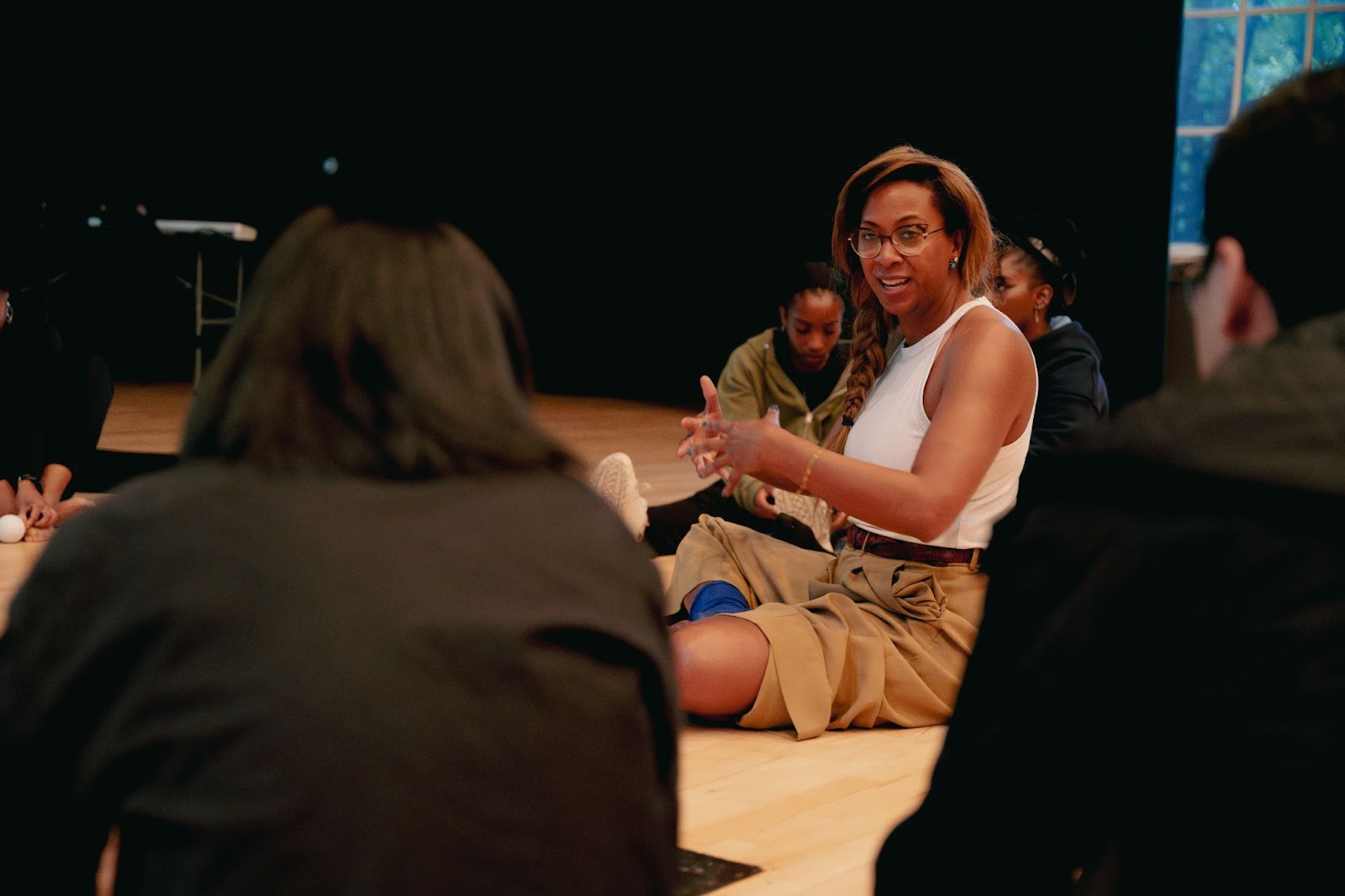 “In a world increasingly shaped by the digital, our students must be fluent in both embodied knowledge and technological innovation. Yesterday’s ‘stage’ and its practices are fading. Our department has been committed to cultivating creators who can code, design, map, layer, and project Black futures in real time,” said T. Lang, associate professor of Dance Performance and Choreography at Spelman.
Formed in 2017 with just over 60 students, the curriculum centers on the choreographic process through the lens of Black feminist theories, contemporary dance techniques and interdisciplinary collaborative practice.
Last fall, a movement improvisation class at Spelman joined with the Emory Arts & Social Justice Program (ASJ) for a semester-long collaboration. The course, co-taught by Lang, a 2022 ASJ Fellow, featured an improvisational dance performance with real-time electronic music that explored human agency in artificial intelligence systems, allowing students to engage with the intersection of art, social justice and technological innovation.
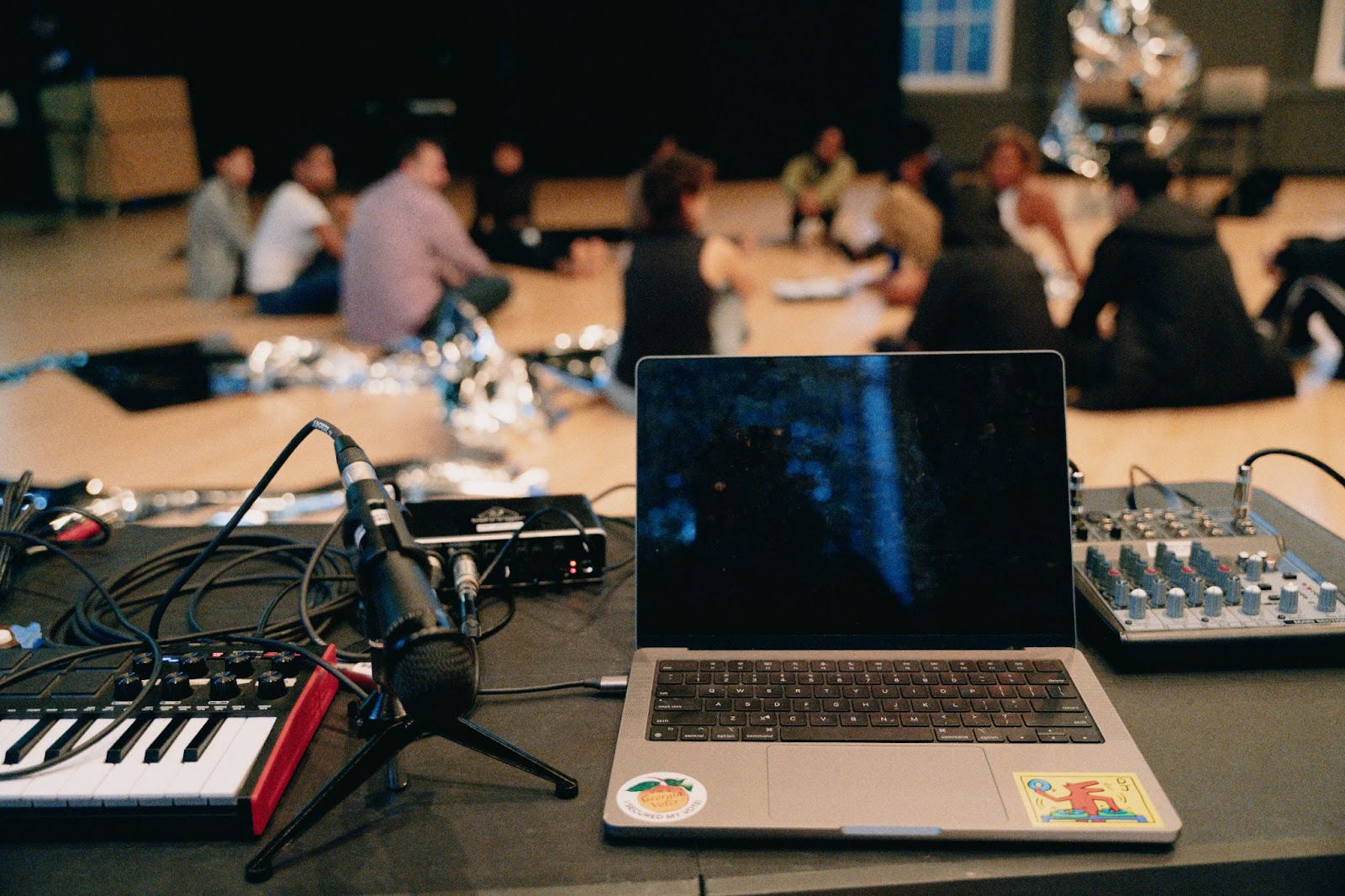 “Technology isn’t merely an embellishment to dance but an integral partner in shaping the choreographic vision. It enables us to push the boundaries of movement beyond the physical limitation, providing tools to archive and amplify the body’s knowledge across time, space, and various platforms,” said Lang.
Recently, students from Lang’s ‘Performance Repertory’ course collaborated with a team of female engineering students from Georgia Tech to co-design biometric costumes. The dance students wore the prototyped costumes while performing an excerpt from ‘Thighs of Thunder’, a choreographed presentation from Lang’s dance company. The biometric engineering in the costumes allowed the dancers’ movements to come alive based on their motion, breath and muscle. The dynamic partnership was an intricate demonstration of how merging movement and science together can expand the possibilities of dance choreography.
Just last year, Maryland Public Television spotlighted Spelman’s Department of Dance Performance and Choreography in a documentary as part of its ‘HBCU Week NOW’ programming initiative, highlighting Spelman’s bold approach to dance education. The documentary explored how the department integrates technology into its curriculum, inspiring innovation among emerging dance and choreography professionals. To view the full documentary, visit HBCU Week NOW’s YouTube page.
The department is a laboratory for liberation: cultivating visionary architects of embodied knowledge. It is a space where movement is both theory, practice, research, ritual, and a place to tinker,” said Lang. “At an accelerated state of motion and intellect our dance students learn to create and think critically while unleashing their imagination, learn how to intervene, learn how to lead, and learn how to own.”
To learn more about the Dance Performance and Choreography major at Spelman, visit spelman.edu.