Faculty Recognition
Celebrating Faculty Excellence and Accomplishments
Nami Kim, Ph.D. Earns Prestigious Ewha Global Fellowship
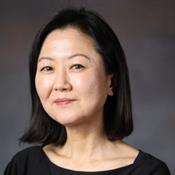 Nami Kim, Ph.D., has been selected as the 2025-2026 Ewha Global Fellow (EGF) of Ewha Womans University. The fellowship is awarded to distinguished scholars from around the world to collaborate with faculty members at Ewha Womans University in Seoul, South Korea, on research and education. Ewha Womans University was founded in 1886 with the mission to educate and empower women, and has since grown into one of the largest research universities for women in the world.
 Shay Welch, Ph.D.
Atlanta Art on the Beltline
2024-2025 Scholar-in-Residence
The Atlanta Beltline residency program is designed to offer real-world exposure operating within the realm of public art and infrastructure.
Visit Dr. Welch's Atlanta Art on the Beltline Work
 Gertrude Gonzales de Allen, Ph.D., and Al-Yasha Williams, Ph.D.,
2023 Caribbean Philosophical Association
Stuart Hall Outstanding Mentor Award
The purpose of this award is to acknowledge activists, artists, scholars, teachers, and theorists who have cultivated influential critical communities addressing the Caribbean Philosophical Association’s concerns of shifting the geography of reason.
View the 2023 Caribbean Philosophical Association's List of Winners
Shay Welch, Ph.D.
Carnegie Corporation and Rockefeller Foundation
2020 Distinguished Research/Creative Scholar
Supported by a $1 million grant from the Carnegie Corporation of New York and The Rockefeller Foundation, the award inspires the growth of talented faculty members.
View the Carnegie Corporation and Rockefeller Foundation List of Winners
About the Department
The Department of Philosophy and Religious Studies offers two majors, one in philosophy and the other in religious studies. While the two majors complement and enhance each other, they retain separate identities and missions. In both programs, Spelman students learn how to read critically, write cogently, identify and interrogate historical and contemporary discourses, apply discipline-specific research methods, conduct and present their research in their courses, and employ inquiry-based learning to take ultimate responsibility for their academic potential.